
Gum Care
Dental Deep Cleaning in Mount Druitt
Treat gum disease and protect your smile.
Gum Care
Clean below the gumline, where it counts
Bleeding gums, persistent bad breath, gum recession and loose teeth can be signs that plaque and hardened tartar have built up below the gumline. When a regular clean is no longer enough, a dental deep cleaning may be recommended to remove these deposits and help control gum disease.
At Mount Druitt Dental, we provide dental deep cleaning — also called scaling and root planing, or non-surgical periodontal treatment. It cleans beneath the gums and along the roots of affected teeth to reduce bacterial build-up and support healthier gums.
Early gum disease (gingivitis) can often improve with professional care and good oral hygiene. If it progresses to periodontitis, the supporting bone may be damaged and teeth can eventually loosen or be lost.
Book Your Appointment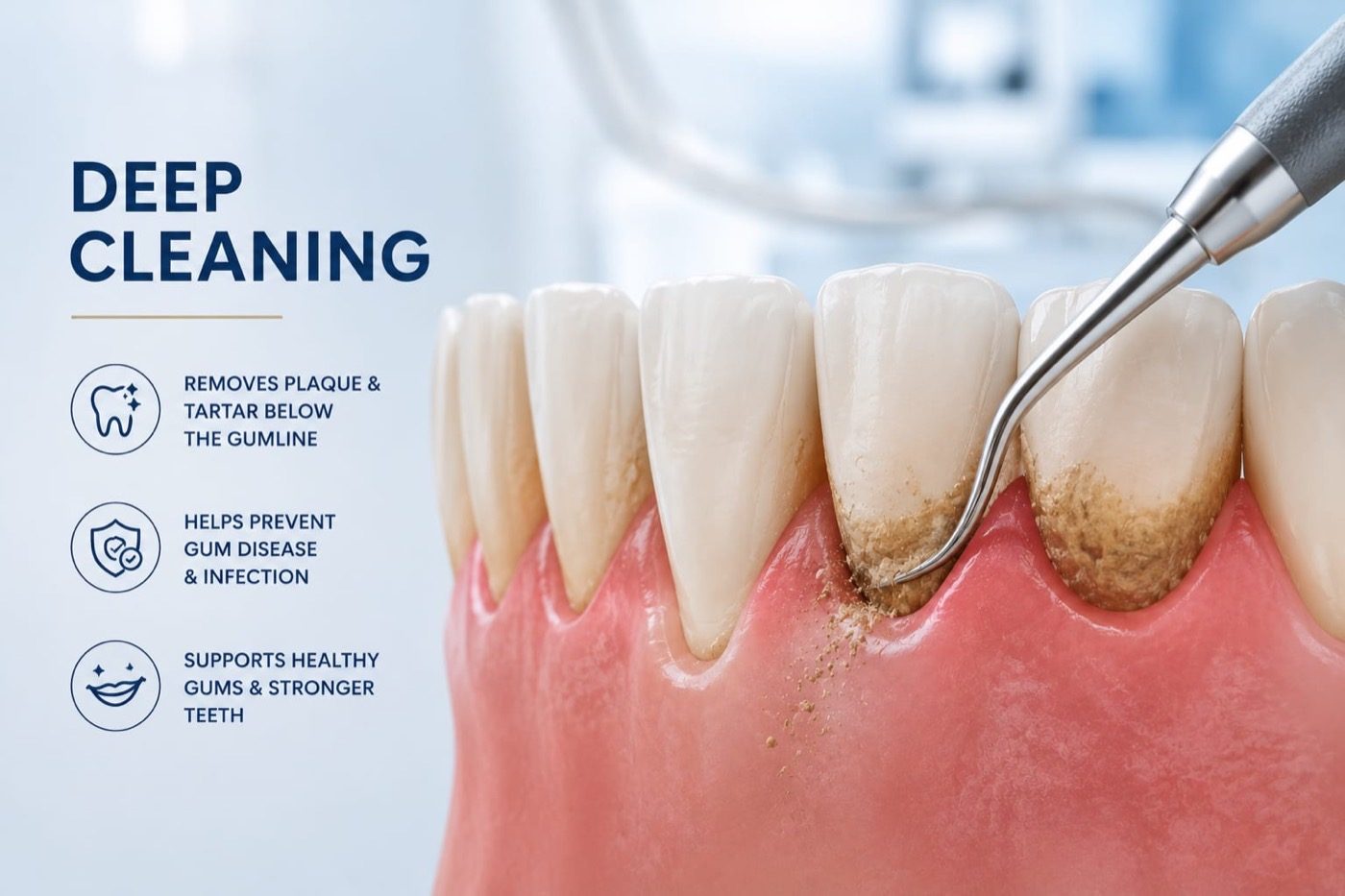
The Basics
What is a dental deep cleaning?
A routine clean removes plaque, tartar and surface staining from around and above the gumline. A deep cleaning reaches beneath the gums into periodontal pockets where bacteria and hardened deposits collect.
Scaling removes plaque and calculus from the teeth and exposed root surfaces. Root planing smooths rough or contaminated areas of the roots, helping the gums heal more effectively around the teeth. Removing plaque and calculus is central to gum disease treatment because these deposits can't be removed with normal brushing alone.
Treatment may be completed in one appointment or divided over several visits, depending on the severity of the gum disease and the number of teeth affected.
When It Helps
Signs you may need a deep cleaning
Gum disease can develop gradually and may not cause much pain early on. Arrange a gum assessment if you notice:
- Bleeding while brushing or flossing
- Red, swollen or tender gums
- Persistent bad breath
- Gums pulling away from the teeth
- Teeth appearing longer
- Food becoming trapped around the gums
- Loose or shifting teeth
- Pain or discomfort when chewing
Bleeding gums shouldn't be ignored — gingivitis is generally easier to manage when treated before permanent damage occurs to the supporting bone and tissues.
Why It Matters
Gum disease treatment matters
Your gums and jawbone support your teeth. Periodontitis can damage these structures and lead to deeper pockets, gum recession, bone loss and increased tooth mobility.
Deep cleaning can't replace bone that's already lost, but it helps control bacterial build-up and reduce gum inflammation. Long-term results also depend on:
- Brushing twice daily
- Cleaning between the teeth every day
- Following your home-care routine
- Avoiding smoking
- Regular periodontal maintenance visits
- Managing health conditions affecting the gums
Advanced cases, or areas that don't respond to initial treatment, may need additional care or referral to a periodontist.
What To Expect
Your visit, step by step
Gum assessment
We examine your gums and measure the spaces between your gums and teeth (periodontal pockets). X-rays may assess the supporting bone and pinpoint active disease. We explain our findings, recommended treatment, likely appointments and costs before proceeding.
Dental deep cleaning
Local anaesthetic may numb the area for comfort. Plaque and hardened tartar are removed from above and below the gumline, including root surfaces inside deeper pockets, and the roots are smoothed to remove spots where bacteria collect. We may treat the mouth in sections.
Review & maintenance
We assess how your gums are healing and may remeasure the pockets, then show you how to clean effectively around the gumline and between teeth. Patients with a history of periodontitis often need maintenance more frequently than routine cleans.
Aftercare
After a dental deep cleaning
Your gums may feel tender afterwards, and teeth may be temporarily sensitive to cold foods, drinks or pressure. Minor bleeding can also occur during early healing.
Continue brushing gently with fluoride toothpaste and clean between your teeth as instructed. Avoid smoking, as it can interfere with healing and increase the risk of gum disease progressing.
Contact Mount Druitt Dental if you develop severe pain, increasing swelling, heavy bleeding or another symptom that concerns you.
FAQs
Deep cleaning questions, answered
Is a deep cleaning different from a regular dental clean?
Yes. A regular clean mainly removes deposits around and above the gumline. A dental deep cleaning treats areas beneath the gums and along the tooth roots where periodontal pockets have developed.
Does dental deep cleaning hurt?
Local anaesthetic may be used to numb the treatment area. You may feel pressure or vibration, but the procedure should not normally be painful once the area is numb.
How many appointments will I need?
Some patients can be treated in one visit, while others require two or more appointments. The number depends on how many areas are affected and the severity of the gum disease.
Will deep cleaning stop my gums from bleeding?
Bleeding often improves as inflammation reduces. However, the result depends on the severity of the condition and how effectively plaque is controlled at home.
Can gum disease return after treatment?
Yes. Gum disease can become active again if plaque and tartar build up. Daily oral hygiene and regular periodontal maintenance are important for keeping the condition under control.
Can deep cleaning save loose teeth?
Treatment may help stabilise some teeth by reducing inflammation. However, the outcome depends on how much supporting bone and gum tissue has already been lost.
How often will I need periodontal maintenance?
The schedule is personalised. Some patients benefit from maintenance visits every three to four months, while others may require a different interval.
Can I eat after a deep cleaning?
Wait until the numbness has worn off before chewing. Softer foods may be more comfortable if your gums feel tender after treatment.
Noticing bleeding gums, tartar build-up or bad breath? Book a dental deep cleaning consultation or call (02) 9677 1172 to have your gums assessed and receive a personalised treatment plan.